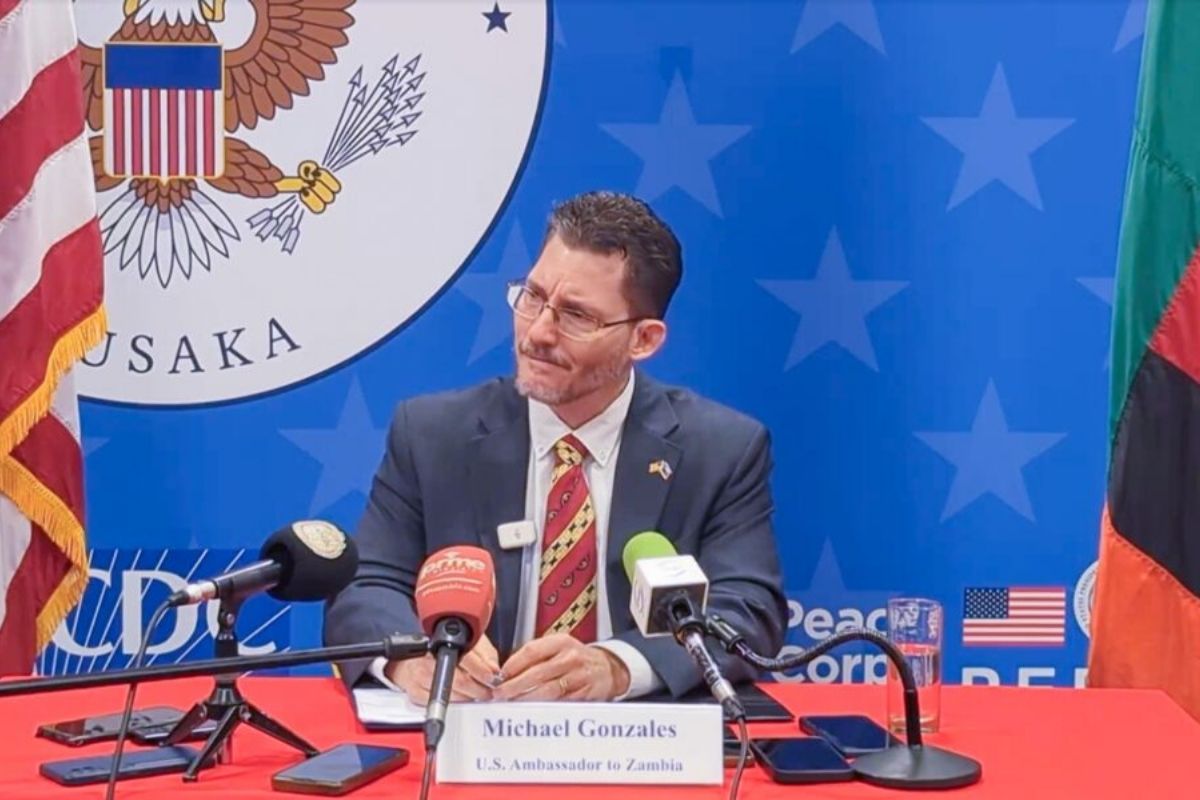
The departure of outgoing United States Ambassador Michael Gonzales has quickly evolved into one of the most debated political stories in Zambia, triggering wider conversations about diplomacy, sovereignty, foreign influence, and the future of Africa’s relationship with global powers.
What initially appeared to be a standard diplomatic exit has instead become politically explosive after comments and reactions surrounding Ambassador Gonzales’ departure were interpreted by many critics as confrontational and unusually direct for a senior diplomat.
Now, the debate has moved beyond one ambassador alone.
For many Zambians, the controversy reflects something much bigger — the changing relationship between African nations and powerful foreign governments in a rapidly shifting global order.
Why The Story Is Gaining So Much Attention
The controversy resonates because it touches on issues that already carry strong emotional weight across Zambia:
- national sovereignty,
- foreign influence,
- economic control,
- mining resources,
- and political independence.
In recent years, Zambia has increasingly positioned itself as a more assertive player in international economic negotiations, especially within sectors linked to:
- copper,
- cobalt,
- critical minerals,
- renewable energy supply chains,
- and regional infrastructure development.
As the global economy transitions toward green energy and electric vehicle production, countries rich in strategic minerals are becoming more geopolitically important.
And Zambia sits directly at the centre of that global competition.
That reality means diplomatic relationships are no longer viewed only through aid and development partnerships.
They are now deeply connected to:
- resource access,
- investment influence,
- industrial partnerships,
- and long-term economic positioning.
Zambia’s Growing Importance In Global Politics
For decades, Zambia was often viewed internationally through the lens of:
- debt challenges,
- economic instability,
- donor dependence,
- and raw mineral exports.
But today, the conversation is changing.
The country is increasingly presenting itself as:
- a regional logistics hub,
- a strategic mining partner,
- an emerging industrial centre,
- and an important player in Africa’s energy transition economy.
Projects such as:
- the Lobito Corridor,
- The Zambia-DRC battery value chain,
- infrastructure expansion,
- and industrialisation initiatives
have significantly increased international interest in Zambia.
As a result, relationships between Zambia and global powers are becoming more competitive and politically sensitive.
Sovereignty Has Become A Powerful Political Theme
One reason the debate surrounding Michael Gonzales’ departure is attracting strong online engagement is that sovereignty has become one of the most emotionally powerful political themes across Africa.
Many African citizens increasingly want governments to:
- negotiate stronger international deals,
- protect national resources,
- reduce external pressure,
- and ensure that foreign partnerships create visible local benefits.
This growing mindset reflects decades of frustration over perceptions that African countries have historically received limited benefits from their natural wealth while foreign interests have gained disproportionately.
As a result, phrases such as:
“Zambia is not for auction”
carry powerful emotional symbolism.
They tap into broader public concerns about:
- exploitation,
- economic dependence,
- foreign interference,
- and unequal global relationships.
Even citizens with different political views often unite emotionally around sovereignty-related issues.
Diplomacy Is Becoming More Aggressive Globally
The Zambia controversy also reflects a larger global trend: Modern diplomacy is becoming increasingly tied to economic competition.
Today, countries compete not only politically, but also economically through:
- trade agreements,
- infrastructure financing,
- technology access,
- mining investments,
- and industrial supply chains.
Major global powers, including:
- United States,
- China,
- Russia,
- and European nations
They are all actively expanding influence across Africa.
This competition is especially intense around strategic minerals needed for:
- batteries,
- renewable energy systems,
- semiconductors,
- and electric vehicles.
Because Zambia possesses large mineral reserves, the country has become increasingly important within global economic planning.
That naturally creates diplomatic pressure from multiple international actors competing for influence and partnerships.
Public Perception Often Matters More Than Official Statements
Another reason this issue continues growing is that public perception in politics often becomes stronger than official explanations.
Whether one agrees with the criticism or not, the tone surrounding Gonzales’ departure has created strong emotional reactions among sections of the Zambian public.
For supporters of stronger national sovereignty, the situation reinforces the belief that Zambia must resist external pressure and negotiate more assertively with foreign partners.
Others argue that international cooperation remains essential and that diplomatic disagreements should not damage long-term partnerships.
But once political narratives become emotionally charged online, they often evolve beyond facts alone.
Social media has amplified these discussions significantly, turning diplomatic commentary into a broader national conversation about:
- identity,
- independence,
- economic justice,
- and Africa’s global position.
Zambia Still Needs International Partnerships
Despite the growing sovereignty debate, Zambia’s economic future still depends heavily on global cooperation.
The country requires:
- foreign direct investment,
- infrastructure financing,
- export markets,
- industrial technology,
- and strategic economic partnerships.
This means the solution is not isolation.
Instead, Zambia faces the challenge of balancing:
- national interests,
- economic growth,
- investor confidence,
- and diplomatic relationships.
Modern African governments increasingly seek partnerships based on:
- mutual respect,
- transparency,
- long-term development,
- and fair economic participation.
That balancing act is becoming one of the defining political challenges across the continent.
Africa’s Political Mood Is Clearly Changing
Ultimately, the reaction surrounding Ambassador Gonzales’ departure reflects something much larger than one diplomatic disagreement.
It reflects Africa’s changing political mood.
Across the continent, citizens and governments are increasingly questioning:
- Who controls African resources?
- who benefits from international agreements,
- and whether old diplomatic power structures still apply in today’s world.
African nations are becoming more confident in demanding:
- better terms,
- greater ownership,
- and stronger negotiating power.
Zambia now finds itself directly inside that wider global conversation.
As geopolitical competition around Africa’s resources intensifies, debates surrounding sovereignty, diplomacy and economic control are likely to become even more prominent in Zambia’s political future.
And regardless of political affiliation, one thing is becoming increasingly clear:
The era when African countries quietly accepted unequal relationships without public debate is rapidly fading.